HIMAPALA UNESA

Himapala Unesa adalah organisasi bergerak di bidang outdoorsport dan sosial.

ORGANISASI

Proin luctus placerat arcu, eget vehicula metus rhoncus ut. Fusce pharetra pharetra venenatis. Sed condimentum ornare ipsum.

Maecenas nisl est

Vestibulum suscipit ullamcorper bibendum. Nam quis commodo ligula. Etiam et mi et magna molestie iaculis.

Lorem ipsum dolor sit amet

Duis fermentum sem nec ipsum lacinia fermentum. Lorem ipsum dolor sit amet, consectetur adipiscing elit.

Popular Posts

Blog Archive

Sample Text

Tampilkan postingan dengan label Mount Everest. Tampilkan semua postingan

Everest 2012: And So It Begins!
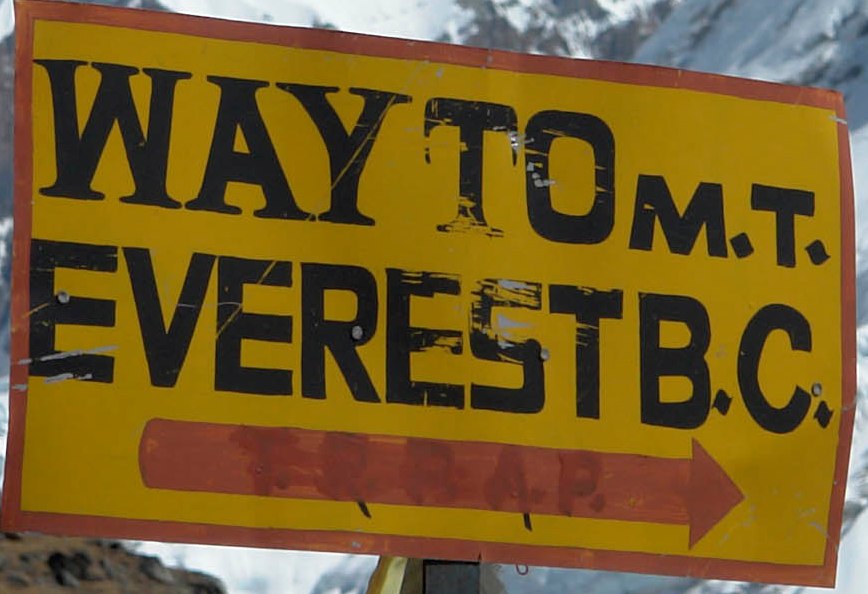
Over the past few weeks we've had a few teases for the start of the 2012 Everest and Himalaya climbing season as some climbers began arriving early and have already set out for Base Camp. But as we all know, April 1st is the unofficial start to the season and right on cue we've started to get a slew of updates from Nepal and Tibet.

As usual, one of the bigger teams on Everest each year is the Himalayan Experience (Himex) team which always brings a large and experienced contingent to BC. This year is no exception of course and according to the expedition's first dispatch, there are 24 climbers hoping to get a crack at the summit this season. The group spent two days getting to know one another in Kathmandu before setting out to Lukla and beginning their trek to Base Camp on Saturday. Today they should be enjoying a rest day in Namche Bazaar and starting their acclimatization process for the long days ahead.

Similarly, the Peak Freaks, IMG and Jagged Globe teams have all started their treks to BC over the weekend as well and they'll soon be joined on the trail by the Altitude Junkies as well. That trek will take each of the teams roughly ten days to complete, depending on how many rest days they take or if they stop to acclimatize on nearby peaks before proceeding to Everest itself. Those long and winding trails to Base Camp are very crowded at the moment with plenty of climbers, guides, and most importantly Sherpas carrying gear to what will be their home for the next two months. It is an exciting time in the Khumbu to say the least.

Amongst those climbers is Ian Ridley, who is currently in Dingboche on a rest day as well. Ian says that he's been feeling a bit under the weather the past few days, which is not uncommon when trekking through the region. A combination of the cold weather and exertion from the trek can develop the "Khumbu Cough," which I can tell you from experience is not a lot of fun. Additionally, a lot of people are simply fatigued from the travel and it is easy to pick up a virus or bug from others or develop a stomach issue from the food. Fortunately it sounds like Ian is on the mend, and his team will be hanging out in Dingboche for several days as they acclimatize on nearby hills.

Phil Purdy seems to be on the same schedule, and may be traveling with Ian, as he is also in Dingboche, which is a popular spot along the way. I spent a couple of days there on my trek a few years back and found it to be a beautiful place for a rest day. The views of Ama Dablam are excellent and will remain with me always.

Finally, the North Side of Everest should start to see some action soon. The border into Tibet opened yesterday and teams are already moving into the country, but they usually spend a few days in Lhasa before starting the drive to Base Camp. Yep, that's right, on the North Side of the mountain climbers can actually drive to BC. They generally take a few days doing do so that they can slowly acclimatize as well, but it is an easier way to get to the start of the climb. The 7 Summits Club has arrived in Kathmandu, but they don't plan on leaving for Tibet until the 12th of April, which gives you an idea of the schedule some of the North Side teams are currently on.

If you're an Everest junkie there are certainly plenty of dispatches and team updates to read today. They've left me a little wistful for the Khumbu as I read about the treks that are currently underway. Enjoy the start of another season. Plenty of action to come.

Everest 2012: Taking Olympic Gold To The Summit

The 2012 climbing season in the Himalaya is starting to ramp up and by next week we'll be getting a steady stream of updates from Kathmandu, Everest Base Camp, Tibet and beyond. As I've mentioned before, a number of teams are already in Nepal and are either on the trail to Base Camp or are putting the finishing touches on their plans before they set out. Those traveling to the North Side of Everest won't be able to enter Tibet until Sunday, but we should start hearing about those expeditions soon as well.

One climber who is no stranger to Kathmandu or Everest is Brit Kenton Cool. He just arrived in KTM earlier today and will be heading out to the Big Hill soon enough. If successful this season, Kenton will notch his tenth summit of Everest and while each of them has been special in its own way, this year he has extra incentive to reach the top. When he heads to the summit in approximately two months time Cool will be carrying a gold medal from the 1924 Olympics with him, and in doing so he hopes to fulfill a promise made 88 years ago.

Back in 1922, one of the earliest expeditions to Everest made a summit bid that was ultimately denied. But in doing so, the team led by Lt. Colonel Edward Strutt, set a new altitude record of 8230 meters (27,000 ft). Attaining that height gave people hope that Everest would soon be conquered and that man could indeed go to amazing heights. The accomplishment was highly celebrated, even though it fell some 618 meters (2029 feet) short of the summit, and Strutt and his team were awarded 21 gold medals at the 1924 Olympic games in Paris. When he received his medal, Strutt vowed to Baron Pierre du Coubertin that he would carry it with him when he went to the summit.

We all know that Strutt was never able to make good on that promise and  it would be another 29 years before Hillary and Norgay would stand on top of the world's tallest mountain. So for 88 years Strutt's promise to the Baron has gone unfulfilled, but in the year that the Olympics come to London, Kenton Cool hopes to take Strutt's gold medal to the top of Everest at last. You'll be able to follow his progress in the days and weeks ahead.

Meanwhile, climber Ian Ridley is on the trail to Everest Base Camp and has been posting some excellent articles to his blog along the way. He and his team are currently in Namche Bazaar where they are enjoying a rest day today before continuing up the Khumbu Valley. For those who haven't visited Namche, it is the largest town in the region and one of the last places to pick-up any gear you may have lost or forgotten. The village actually has quite a few amenities, including a pool hall, multiple Internet cafes, several excellent bakeries, and a row of gear shops.

Reading Ian's posts have made me wistful for my trek through the Khumbu from a couple of years back and they are a good read for anyone who is planning on going to Everest in the future. He's just three days into the trek at this point, so there is plenty more to come.

I'm eager for the start of another season. Wish I were there in Nepal again, but I'll have to settle for following along from afar. It is shaping up to be another great spring in the Himalaya.

Everest 2012: Climbers Arriving In Kathmandu

This is a very busy week for the teams planning on climbing Everest or one of the other Himalayan peaks this spring. Most of them have now packed their gear and shipped it to Kathmandu and are either en route themselves or will be departing shortly. Just getting to Nepal can be quite an experience as I discovered a couple of years back. My journey from Austin, Texas to KTM required 36 hours of travel spread out over  four flights. Needless to say, after all of that time you arrive in a less than optimal state.

This morning Alan Arnette, who has made that journey a fair number of times himself, has written a blog post about the experience and shared a few updates from climbers who are now arriving in Kathmandu. One of those climbers is Ian Ridley, who has already passed in and out of Nepal's capitol. Ian is now on the trail to Base Camp and should be amongst the first arrivals sometime next week.

Alan also linked out to a good radio interview, which you'll find below, with Conrad Anker who shares insights into his upcoming Everest expedition sponsored by National Geographic. Anker and his team will be taking on both the West and Southwest Ridges, while being shadowed by scientists who will be conducting a variety of research studies while there.

From my own experience in Kathmandu that the city is currently a hive of activity. Climbers and trekkers are arriving en masse right now and some will spend a few days there while others will turn around and head straight out to the mountains. Weather will start to become a concern, even at this early stage, as flights out to the legendary Lukla airport will be regularly delayed or canceled. The days spent in KTM can be spent picking up last minute gear items in the Thamel District (beware counterfeit gear!), touring the city and the surrounding area and generally resting up for the challenges ahead. While I was there it was warm and muggy and rolling blackouts made it much more comfortable to be outside than staying in a stuffy hotel room. Kathmandu is as amazing and crazy as you would imagine, and some place that every traveler should experience at least once.

We should start to hear about arrivals in BC on the South Side by next week and the real work will start to get underway. The Sherpas are already there, staking out the camps for the various teams and preparing to build the route through the dangerous Khumbu Icefall. On the North Side things will lag behind a bit, as climbers won't even gain access to Tibet until April 1st. Expect to hear more from that side of the mountain shortly.


Nat Geo Adventure Interviews Simone Moro

Italian alpinist Simone Moro is amongst the best high altitude mountaineers in the world today. His list of accomplishments include multiple summits of Everest and Lhotse, as well as the first winter ascents on Shisha Pangma, Makalu and Gasherbrum II, amongst others. Recently National Geographic Adventure caught up with Simone for a brief interview, which you can read by here.

In the interview, which is conducted by Freddie Wilkinson who is no slouch of a climber either, Moro discusses his recent efforts to launch a climbing school in the Karakoram, his thoughts on the use of supplemental oxygen on the world's tallest mountains and his epic traverse of Everest. On that expedition Simone climbed up the South Side of the mountain in Nepal but descended on the North Side into Tibet, where he received a fine from the Chinese for making an illegal climb. He completed that adventure without the assistance of guides or Sherpas no less.

The interview itself isn't particularly long, but there are a lot insights to be gained from it. Simone is an interesting guy and he obviously knows a lot about mountaineering. He has made some of the most difficult climbs ever and seems to thrive on suffering. He also seems to favor winter climbs on the big peaks as the crowds are far smaller and the challenges are bigger.

Definitely worth a read if you're interested in high altitude climbing.

Everest 2012: What To Pack

Have you ever wondered what climbers take with them, in terms of gear, for an Everest expedition? Then you're in luck as a new article on the Beyond The Edge expedition site takes an in depth look at what one climber is packing for Everest this year.

The Beyond The Edge expedition is the team that I told you about last week that is led by Conrad Anker and will attempt the West Ridge this spring. The climbers have just arrived in Nepal and will spend the next few days getting their gear organized and making last minute preparations before they begin the trek to Base Camp. One of those climbers, ski mountaineer Hilaree O'Neill, shared her packing list for the trip and as you can imagine there is quite a lot of gear to carry along.

Hilaree's list is a bit longer then some others due to the fact that she is bringing her ski equipment along as well. You can view the entire list, which spells out exactly which brand and specific model she elected to bring, by clicking here. Since the expedition is co-sponsored by The North Face, you will of course find plenty of their products on the list, but you'll also find gear from Black Diamond, Scarpa, Dynafit and more. Hilaree even lists the technology she's bringing alone (her iPad and iPhone are in her pack!) as well as her favorite foods that will help see her through the journey.

Considering the fact that most of these climbers will be in the Himalaya for upwards of two months, the list isn't necessarily all that long. Still, it gives you a good idea of what they have in their packs and what they've found works best for the environments they are about to tackle.

Expect many more updates from this team as they get going. They are expected to hit BC around the 15th of April, which is when things should really start to get interesting.

Everest 2012: Conrad Anker Leads Nat Geo/North Face Expedition

As I mentioned a few days back, we're just a few short weeks away from the start of another spring climbing season on Everest. Even now there are climbers across the globe who are busily packing their gear, making last minute arrangements and preparing to set out for Kathmandu. One of those climbers is Conrad Anker, who will lead an expedition sponsored by National Geographic and The North Face.

Anker and his team, which will include Corey Richards, Kris Erickson, Hilaree O’Neill, Emily Harrington and Sam Elias, will be taking on the West Ridge, which is a more technically challenging climb. The expedition looks to celebrate the first ascent of that route back in 1963 and Richards will film the entire climb for a documentary film project.

In support of the expedition, Nat Geo has launched a new website that has everything you would want to know about Everest and then some. That includes a great piece on how the gear used to climb the mountain has evolved over the past fifty years. The site's blog will also provide insights into the climb leading up to its start and will host dispatches and progress reports directly from the team starting around mid-Apriil. Even more extensive coverage will be available in real time directly from the National Geographic Magazine iPad app, which will be released on April 16. That is likely about the time that they'll be establishing Base Camp on the mountain.

In addition to climbing the mountain and documenting the ascent, the expedition team has some other goals in mind as well. They'll be working closely with a team of geologist who will be in BC throughout the expedition as well, taking samples from the region and exploring the unique geography and geology of the region. Some of that work will also be applied directly towards developing a new curriculum to be used with fifth graders.

This will be yet another exciting expedition to follow this season. The fact that Conrad is a part of this and Corey is filming means that we should get a good look at the West Ridge route, which is seldom seen and not nearly as well known as the routes along the North and South Faces, which are used so commonly.

Watch for updates from the team starting soon.

Everest 2012: A New Season Is Nearly Here!

Spring. Who doesn't love that season? It is a time for renewal. A time to put away the trappings of winter and prepare for the warmer months ahead. Of course, if you happen to be a blogger with a penchant for adventure, it also means a time to look to the Himalaya and the start of another climbing season. And while the start of that season is still a few weeks off, climbers and guides across the globe are busily putting the finishing touches on their preparation for an early April launch to their expeditions.

Of course, the mountain that is the biggest draw is also the tallest. Everest always holds an undeniable allure for mountaineers of all types, including the armchair variety. With that in mind, over the next few months we'll be hearing a lot about the teams climbing that peak, as well as a number of others in the region.

One of the expeditions that I'll be following closely this year is the First Ascent team that will attempt to recreate the 1963 American expedition that not only completed a traditional climb up the South Col, but also pioneered a new route along the seldom visited – and much more challenging – West Ridge. That expedition not only put the first American, Jim Whittaker, on the summit, it also featured the first traverse of an 8000 meter peak.

Later this spring, Dave Hahn and Melissa Arnot will guide Leif Whittaker, the son of Jim, to the top of Everest via the South Col route. Meanwhile,  Jake Norton, Brent Bishop, Charley Mace, and Dave Morton will be tackling the West Ridge, which remains the most challenging climb on the mountain to this day. If successful, Hahn will notch his 14th summit of Everest, extending his record for the most climbs of the mountain by a non-Sherpa. Arnot can make history of her own, as a successful summit on her part would bring her total to four, the most by any non-Sherpani in history as well.

The two teams, along with many others, will be setting out for Nepal before the end of March. You can learn more about their plans by clicking here and follow their dispatches on the First Ascent blog.

Video: The Conquest of Everest

We all know the story of Edmund Hillary and Tenzing Norgay becoming the first men to summit Everest, but this video is still just too great not to share. It is an hour plus long documentary that was put together not long after that historic climb and it is as much fun to watch for the nostalgia as it is for learning about the actual climb. This is definitely a throwback to a different era and well worth watching in its entirety. Great stuff!


Video: 2012 Adventurers of the Year

Last week we celebrated the announcement of Babu Sunuwar and Lakpa Tsheri Sherpa as National Geographic's 2012 Adventurers of the Year. Today we have a video of the daring duo, who climbed Everest, rode a paraglider off the summit, then cycled to the river and paddled to the Indian Ocean.

The shots from their GoPro cameras while in flight are fantastic and you have to love Babu and Lakpa's sense of adventure. Their bonds of friendship are also very evident in the video as well.


The Costs of Everest - 2012 Edition

Earlier this week, Alan Arnette posted another very interesting article to his blog which breaks down the costs of climbing Everest this spring season. The story will likely be an eye-opener to some, but it does an excellent job of breaking down the options, including putting together your own expedition, joining a fully guided climb, or something in the middle. He also discusses some of the differences climbing from the North as opposed to the South and shares some important issues on logistics as well.

The bottom line from this article is that climbing Everest isn't cheap, even if you climb solo and with little support. But Alan does a good job laying out exactly what the costs should be and what the various fees deliver for your money. The expenses add up quickly when you consider that you need to get yourself, and considerable amounts of gear, to Nepal or Tibet, and that you then need to get to Base Camp on either side of the  mountain. Once there, climbers need to set up camp for six weeks or so, which requires plenty of supplies as well. Mix in climbing permits, communications to and from the mountain, and a variety of other miscellaneous expenses, and you start to understand why this is such an expensive endeavor.

Alan also points out that the North Side of Everest was always a less expensive option in the past, but that is changing somewhat. The Chinese have raised the costs of permits, which will have an impact on those traveling to that side of the mountain this year.

This article is definitely an interesting read, especially if you have dreams of doing Everest yourself in the next few years.

More Pre-Everest Posts From Alan Arnette

A few weeks back I mentioned that Alan Arnette had already started his always great coverage of the Mt. Everest climbing season by posting several stories to his blog. Since that time, he has added more great posts that will help to get us all ready for the spring, when most of the action takes place on the world's tallest mountain.

One of the posts that I think will be of particular interest is Alan's look at Lhotse, the mountain right next door to Everest. Just how close are these two? Climbers going to the summit of either mountain share campsites all the way up to C4, where they then go different directions toward their respective summits. The climb to the top of Lhotse isn't nearly as crowded as Everest, and it is roughly 333 meters (1095 ft) lower, but it also presents some technical challenges that aren't an issue on its taller neighbor. Alan breaks down the differences and discusses the climbs very nicely.

When you're done reading about Lhotse, be sure to move on to Alan's profile of an Everest Sherpa. If you know anything about climbing in the High Himalaya, you know that almost no one would summit without the help of their Sherpa guides. They are a tough, strong, group of people and it is clear that Alan respects them very much.

Finally, check out this interview with Cian O'Brolchain, a former professional tennis player from Ireland, who has set his sights on Everest this season. Cian is climbing to raise awareness of Cystic Fibrosis, and doesn't have a lot of climbing experience under his belt. That said, he has already topped out on Cho Oyu, and seems determined to go even higher this spring. He and Alan discuss his mountaineering experiences so far and what he brings along with him from the world of competitive tennis that can aid in his mission.

As usual, these are all excellent reads and are setting us up nicely for the action that will be coming later in the spring. As the Antarctic season winds down, and the winter climbs come to a close, we'll be transitioning over to Everest, and the rest of the Himalaya, where there will be plenty of drama once again.

Alan Arnette Preps Us For Everest 2012

The Antarctic skiers may still be on the ice, and the major winter climbs are still getting underway, but it is never too early to start looking ahead to the spring season on Everest. With that in mind, Alan Arnette has already started to produce plenty of great content that will help get us ready for another busy year on the world's tallest (and most popular!) mountain.

Among the stories that Alan has already posted is an excellent look at the various routes up Everest, of which the South Col is the most popular, but not the only way to go. He also has a great tutorial on how to communicate from the mountain – or any remote place for that matter– sharing what has worked for him on his various expeditions in the past. There is also an inside look at the Himex Base Camp, which is always one of the best on the mountain.

I particularly enjoyed Alan's interview with climber Bill Burke, who will attempt to summit Everest twice this year, once from the South and once from the North, at the age of 70 no less. In the interview, Burke talks about his experiences on the mountain – this will be his sixth year in a row there – and his motivations to climb. He also touches on the logistics of this upcoming double-summit attempt, and a whole lot more.

Those who are considering Everest themselves will benefit from Alan's "Getting Into Everest Shape" post from back in late December, while armchair mountaineers will probably prefer to keep an eye on his Everest 2012 page, which will be updated regularly as the season gets rolling along, keeping us all well informed of where the various teams are on the mountain.

It may still be more than two months before the start of the festivities on Everest, but it will most certainly be here before we know it. As always, I'm sure it'll be one of the highlights of the year, and I look forward to a busy and interesting season ahead.

Five Years On, David Sharp Still Haunts Everest

In May of 2006, British mountaineer David Sharp died while climbing alone on Mt. Everest. He was approximately 450 meters below the summit and the exact details of what went wrong are unknown to this day. But what is known is that while he lay there in the snow, just off the main path on Everest's North Side, roughly 40 climbers passed him on their way to the top. No one stopped to render aid or tried to conduct a rescue, and the 34-year old perished while others went up to celebrate their successful summits.

The incident resulted in quite a backlash within the mountaineering community which still resonates to this day. Some were critical of the fact that no team even attempted to bring Sharp, who was suffering from exposure and altitude sickness, down the mountain, and a number of high profile figures on Everest were lambasted for leaving David to die. Those involved more directly in the controversy claim that there was confusion over the Sharp's health and status, and communications over what to do for him were unclear as well.

It didn't help that much of the media at the time portrayed the climbers as being very callous, not carrying what happened to another human being, while remaining singularly focused on getting to the top of Everest. Few understood the logistics of pulling off a high altitude rescue, but the fact that no one even tried has been at the center of this story since it first broke.

One of the climbers who was there that day, and walked past Sharp on his way to the summit, was New Zealander Mark Inglis, a double-amputee who made history by becoming the first man to climb the world's tallest mountain without either of his legs. Inglis went on to write a book about that experience and included his recollection of what happened regarding Sharp. Inglis maintains that he and his teammates thought that David was already dead, so they continued on their way, but not before checking in with team leader Russell Brice back in Base Camp, who allegedly told the team to forget about Sharp and keep moving. Brice for his part says that he didn't speak with Inglis about the matter, which has led to even more confusion over the whole situation.

This has all been brought to the forefront once again thanks to an interview that Inglis conducted with the BBC. In that interview, the Kiwi climber says that he regrets not going back when his team came across Sharp on the mountain, but he continues to say that a rescue wasn't possible, particularly in the extreme cold and altitude on Everest. Unfortunately, the BBC won't let me embed the video here, but you can watch a segment of it by clicking here.

The David Sharp controversy has been an on going one over the past few years, and considering some teams have since successfully conducted high altitude rescues on Everest and other mountains, it isn't likely to go away anytime soon. While it is a sad story to say the least, I do think it has had a positive impact on the mountaineering community, who seem less likely to simply give up on a fellow climber in the wake of the events that went down on Everest back in 2006.

Thanks to Adventure Journal for sharing the link to the video.

British Ultrarunner Sets New EBC to Kathmandu Speed Record

British ultrarunner Lizzie Hawker has set a new speed record from Everest to Kathmandu, by running from Base Camp to the capitol of Nepal in just under three days. Hawker started the run last week and finished the 320km (199 mile) route on Friday.

Officially, Hawker's time was recorded as 2 days, 23 hours, 25 minutes, which shaved a bit of time off her previous record, which was set back in 2007, when she made the same run in 3 days, 2 hours, 39 minutes. Her latest time includes an unexpected stop over in the village of Bupsa, where Hawker spent 8 hours waiting out the rain. At that point she thought her chances of breaking the record were slim, but she managed to get back on the trail and make up the time.

Perhaps even more impressive, Lizzie, who is amongst the top ultrarunners in the world, completed the run without sleep and while suffering from what is described as a chest infection, which she contracted while on the Everest Sky Race. My guess is that she had a bad case of the Khumub Cough, which I can tell you from my own experience is quite nasty. I don't envy her on that run.

Considering the trek from EBC to Lukla takes about four days by itself, this is super-impressive. Most of us then board a plane and fly back to Kathmandu from Lukla, but Lizzie kept on running, finishing up the whole journey in under three days. Amazing.

Thanks to Outside Online for the tip on this one!

Soldier Told He'd Never Walk Again Now Trekking To Everest Base Camp

In 2007, British solider Jonathan La Galloudec was wounded in combat while serving in Iraq. The young man was hit in the spine by gunfire, and doctors told him that he would never walk again. Not taking no for an answer however, Jonathan continued to work hard, rehab from his injuries, and focused on getting his life back to normal. His hard work paid off, and while he remains partially paralyzed, he did learn to walk once more.

Now, the former solider is making the trek to Everest Base Camp as part of an expedition to support the Help For Heroes organization, a non-proft dedicated to raising money to help servicemen and women who have suffered injuries in the line of duty. A few days back, Jonathan and his team began the trek, which will take him up to 5364 meters (17,600 ft.), the location of Base Camp on the world's tallest mountain. You can follow his progress by clicking here.

The expedition is sponsored by Energizer, who have pledged to donate £100,000 ($160,000) to the H4H organization, plus an addition £20,000 for reaching specific targets in Facebook likes. The overall goal is to raise £500,000 ($800,000) total. You can aid in that cause by going to the Everest Hero Diary page on Facebook and clicking the "Like" button.

According to the PR on this trek, since being wounded, Jonathan has struggled at times just to go for a walk in the rain, as the conditions made it difficult for him to get around. Considering that weather conditions in the Himalaya have been less than ideal lately, the young man could be having a rough go of it on this hike. Even in the best of conditions however, the trek can take its toll on those who aren't prepared. When I did it last year, I saw perfectly healthy people struggle with the altitude and steep climbs. Still, La Galloudec seems determined to reach his goal, and if everything goes as planned, he should be in EBC by November 22nd.

Learn more about Jonathan and this trek in the video below.


Book Review: Into The Silence

I've said it before, and I'll say it again. Mt. Everest has always captivated the public's attention and spurred our sense of adventure. The mountain isn't just the tallest peak on the planet, it is also a physical manifestation of our need to explore and add a little danger and excitement to our lives. 

Into the Silence: The Great War, Mallory and the Conquest of Everest by Wade Davis, helps to hammer home this point by tracing the early history of the mountain, how it came to rise to prominence in the minds of explorers, mountaineers, and the public in general. The book features a cast of thousands, with larger than life figures from a bygone era each playing a role in putting Everest on the map – both literally and figuratively. 

As you can probably guess from the title, the book focuses on George Mallory and his early attempts to climb Everest. Of course, Davis gives us a detailed and rich account of those expeditions, beginning with their very origins and leading up to that fateful day in 1924 when Mallory, and his climbing partner Sandy Irvine, disappeared just a few hundred feet below the summit. But before he gets there, he spins quite a tale that will enthrall and amaze you. 

The story gives us an incredible amount of backstory that includes how the British explored the Himalaya, established relations with Tibet, and established a permanent presence in the region. During that time, several prominent soldiers and explorers began to become obsessed with Everest and getting the chance to climb it, even though there wasn't even a route established to the mountain itself, let alone up it. 

The earliest serious discussions of climbing the mountain took place in the early 1890's, between explorer Francis Younghusband and Charles Bruce, a soldier in the British Army. The two men would eventually play a vital role in getting those early expeditions organized and funded, but it would take decades for that to happen, and each of the principle characters would change dramatically over those years, and watch the world change around them. 

In those days, there were a lot of obstacles to climbing Everest, such as the fact that the region was still largely unexplored and there were a lot of politics to overcome before any expedition could even approach the mountain. But the biggest obstacle of all came in 1914, when World War I broke out, putting the world on pause for the next few years. 

The conflict changed the face of warfare and brought a new definition of horror to the men who fought in it. Davis paints a very vivid picture of what it was like on those battlefields and if you're not already familiar with how the first World War was fought, you're likely to experience a little of that horror yourself. It was the bloodiest and most brutal war in history, and it had lasting repercussions that lasted for decades to follow.

Following that war however, there was a renewed interest in Everest and the Royal Geographic Society was able to pitch the expedition as a matter of national pride. After all, the Brits had lost the race to both the North and South Pole, and Everest was viewed as the last great challenge. One that the Empire couldn't afford to lose. 

As we all know, it would be another 30 years before Everest would eventually be climbed, but that doesn't make this tale any less fascinating. The story of Mallory and Irvine and all of the back history that put them on that mountain in June of 1924 is an incredible read, and while at times you'll think you've picked up a history textbook, it all comes together brilliantly. It is hard to believe that there could be a more detailed account of those expeditions or a more accurate portrayal of the men who were involved in the whole affair. 

Mallory is almost as captivating as Everest itself, and the man and the mountain will always be linked to one another. This book puts that relationship in perfect perspective and gives you a better understanding of the climber and the challenge that would take his life. If you're a fan of history, mountaineering, or Everest, than you'll definitely want to own this book. (Price: $19.34 from Amazon

New Everest Documentary Spawns Reality Series

A new Everest documentary entitled 40 Days at Base Camp, made its debut at the Vancouver International Film Festival last week, and will headline the Banff Mountain Film Festival next week. By all accounts, it is a gripping look at what happens on the mountain during a typical climbing season.

Evidently, the film must be something special, as filmmaker Dianne Whelan has already been commissioned to return to Everest next spring to shoot an 8-part reality series on the North Side of the mountain. The show is expected to air in December of 2012 and may be a replacement for the now defunct Everest: Beyond The Limit, which aired for three seasons on the Discovery Channel.

Below is the trailer for 40 Days, which looks very well done judging from this footage. Obviously they filmed this documentary on the South Side of Everest, which is considerably busier than the North these days. I'm sure they won't have any shortage of good stories to tell from the Tibetan side of the hill though.


40 Days At Base Camp- Trailer from Andrew Coppin on Vimeo.

The New York Times Looks At Speed Climbing

The New York Times has posted a story and video on speed climbing in the world of mountaineering and takes a look at the approach to climbing, which inherently brings some risks for those who choose to go faster in the mountains.

The article mentions or quotes a number of big name climbers, including Steve House, who has a few harsh things to say about the approach, saying that speed records are for stroking someone's "ego." The Times also interviews Chad Kellogg about his attempts at a speed record on Everest, and the included video, which can't be embedded here, shows Chad training on Mt. Rainier. Rock climber Alex Honnold weighs in, saying he just climbs, and that speed records are simply a by-product of the faster approach. Even Ueli Steck offers some comments, saying that it is important to balance speed with safety on any climb.

I came across this link thanks to a post over at the Adventure Journal, and like them, I'm happy to see mountaineering get some mainstream press, but the writer acts like it is something new for climbers to try to go faster and lighter on the mountain. It has been happening for years, it is just that we've gotten to the point now where the athletes are better trained, better prepared, and have better equipment than ever before. That combination is allowing a few elite climbers to really push the envelope.

I think the following quote from Steve Swenson, president of the American Alpine Club, is a good one:
“Fifty years ago, adventure in the mountains was more about going places where no one had been,” he said. “Most of these places have been more thoroughly explored. Maybe adventure gets redefined.”
To me, "adventure" is a very personal thing, and what consitutues an adventure for some people, may not  be the same for others. It is important that we all find the definition that works for ourselves, and then pursue the best way to put some adventure into our lives. That's what I see out of these climbers. They are indeed redefining adventure for the 21st century.

Everest Now Streaming On Webcam

A team of scientists researching the effects of climate change on the Himalaya have installed a solar powered webcam on Kala Patthar and aimed it at everyone's favorite mountain – Everest. The cam is only in operation from 6AM to 6PM local time (which means as I write this, it is off) but offers of views of the world's tallest mountain during daylight hours.

The researchers have also set up a host of weather recording instruments and hope to use them in conjunction with the camera to monitor how Everest changes over time as a result of our changing climate. Glaciers throughout the region are in retreat and that has had a direct impact on the amount of fresh water that is available for those living in the mountains. As the atmosphere continues to warm up, the mountain people of the Himalaya could be facing a potential crisis that will have a direct impact on their way of life.

Check out the webcam by clicking here and the Everest weather monitors by clicking here. They offer up such info as current temperatures, humidity, wind speed, and more.

Video: Through The Khumbu Icefall

If you ask any climber on the South Side of Everest what the scariest part of the mountain is, most will invariably say that it is the Khumbu Icefall. Ironically enough, this portion of the climb is actually located at relatively low altitude, sitting just above Base Camp. The Icefall is created by the Khumbu Glacier, which begins breaking apart on this section of the mountain. The result, is rather large crevasses that must be negotiated by the climbers in their way up to Camp 1. In order to cross those open areas, a team of Sherpas, known as the Khumbu Ice Doctors, build and continually maintain, a route through the falls using a series of ladders to cross.

So, just how scary is this section of the climb? Check out the video below to get an idea. I've seen these videos, and even the Icefall, for myself, and it never gets any easier to look at.

Thanks to The Goat for the heads-up on this one!